Fluent in Uncertainty
How immigration uncertainty reshapes not only career paths, but the ways international students learn to adapt, strategize, and imagine the future.
By Ariel Cheng
As graduation approaches, many international students find themselves hovering over LinkedIn, scrolling through job listings they are qualified for, only to reach the bottom and see the same sentence repeated:
“This position does not offer visa sponsorship.”
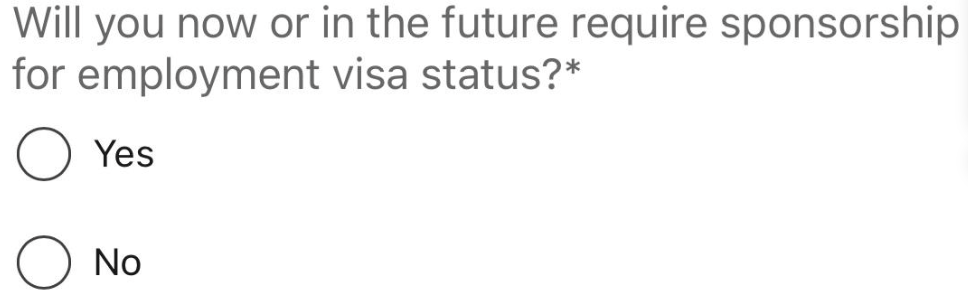
It is a predetermined rejection that appears before an interview, removing a student’s eligibility before an application is even submitted. The line appears so often that many students learn to look for it before they even read the job description itself.
For international graduates, the job search is not simply a competition of talent. It is a negotiation with immigration policy, employer misunderstanding, and a ticking visa timeline that can reshape majors, industries, and long-term dreams.
Somewhere between ambition and practicality, immigration status quietly enters the conversation, reshaping what feels possible. Navigating these systems often requires students to become fluent not only in interviews and applications, but in paperwork, timelines, policies, and contingency planning.
For some students, this filtering happens before an application even begins.
Rosella Nguyễn, an international student at New York University studying performing arts and global media, said she often rules out jobs before applying.
“I immediately rule out anything before I even start an application,” she said. “A lot of the big target jobs that students want are barred at the first step. There is not even an entry for us.”
Over time, that filtering becomes internalized. Students begin adapting to limitations before employers even impose them.
Navigating these barriers also requires a different kind of fluency. Rather than shrinking themselves to fit rigid hiring systems, some learn to translate their experiences into adaptability, cultural awareness, and resilience.
For students like Nguyễn, this reality reshapes not only what they apply to but also how they define themselves as candidates.
“I dissect my internships into skills and look for anything adjacent to those skills,” she said.
That mindset, she added, is not new. It comes from navigating competitive systems long before entering the U.S. job market.
“We’ve surpassed so many people to get here. International admissions is intense,” she said.
Rather than narrowing herself to fit rigid job descriptions, Nguyễn expands how she presents her value.
“I have a global perspective, and that is something people are always looking for,” she said.

“I have a global perspective, and that is something people are always looking for.”
—Rosella Nguyễn
In global cities like New York, where industries increasingly operate across cultures and markets, students like Nguyễn see their international background not only as an immigration category but as a professional strength.
With a background in performance, she approaches the job search like understanding an audience: how to capture attention, position herself, and stand out.
To navigate these constraints, platforms like Interstride have emerged. The career and immigration planning platform helps international students and universities understand job opportunities, visa options, and long-term strategies. Judy Chen, head of partnerships at Interstride and a former international student herself, sees patterns in how students approach these decisions.
The career and immigration planning platform helps international students and universities understand job opportunities, visa options, and long-term strategies
Students often reach out with urgent but vague questions, Chen said. “Some will just say, ‘I’m about to graduate, and I just want to find a job. How can you help?”
These messages reflect how overwhelmed many feel as they navigate both the job market and immigration requirements. Many focus first on securing employment before fully understanding visa logistics, only developing that knowledge later in the process.
The confusion is not limited to students. Employers often misunderstand visa categories as well.
“For CPT internships and OPT, where you do not need sponsorship, students face a lot of employer confusion,” Chen said. “Employers lump CPT, OPT, H-1B, green card — all of it — into ‘sponsorship,’ even though that is not very accurate.”
Because of these misunderstandings, international students often find themselves responsible for explaining their work authorization to employers.
What should be a straightforward hiring process becomes a negotiation involving visa timelines, eligibility rules, and employer risk tolerance.
In many cases, international students are expected to market not only their skills but also their legal status.
John Nguyen, a computer science and business student at Northeastern University who has secured multiple co-op positions in finance and trading, said immigration status continues to shape opportunities even for students who successfully enter competitive fields.
“Some companies completely barred international students from applying. They would not consider you if you hit apply,” he said.

“Some companies completely barred international students from applying. They would not consider you if you hit apply.”
—John Nguyễn
He added that even internship pipelines are influenced by long-term hiring considerations.
“When they hire co-ops, they are also looking for someone they can bring back full-time, and that makes them hesitant with international students,” he said.
For some, that uncertainty does not appear until the final stages.
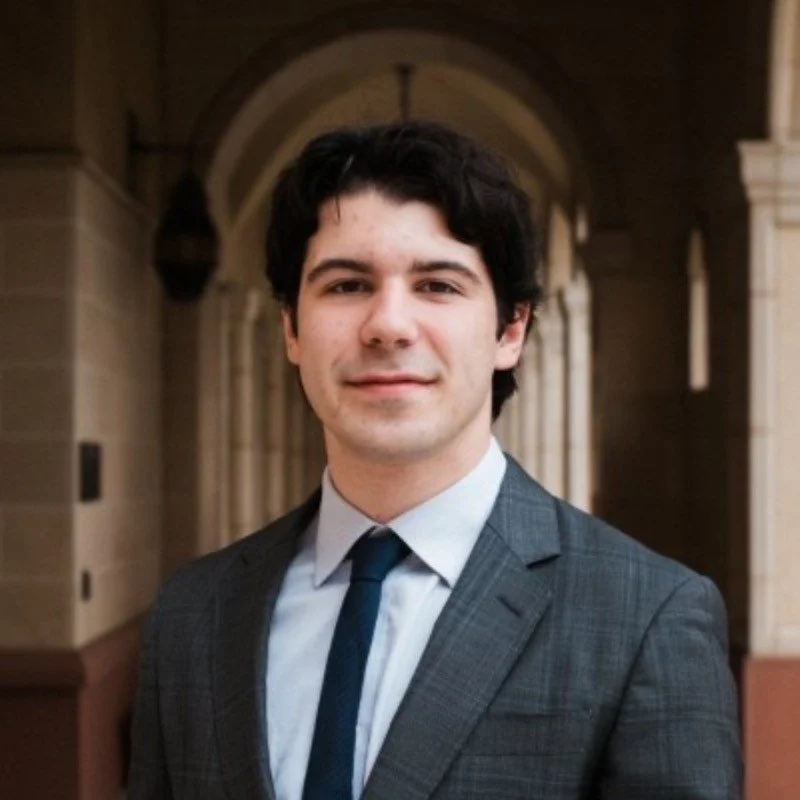
Victor Moldoveanu, a fourth-year student at the University of Southern California studying economics, mathematics, and psychology, said he has experienced reaching final interview rounds only to be rejected once his visa status is discussed.
“They were impressed and ready to give me the job. Then they asked about my visa and said they weren’t accepting OPT,” he said.
The rejection had little to do with capability and everything to do with uncertainty. In these moments, the job search shifts from a question of qualification to one of eligibility. Students are forced to become adaptable long before they are ever secure.
While frustrating, Moldoveanu said he understands the hesitation.
“If it were my country, that’s not my job to understand,” he said. “So I understand that people won’t understand it for the most part.”
“If it were my country, that’s not my job to understand,” he said. “So I understand that people won’t understand it for the most part.”
—Victor Moldoveanu
This burden extends into career advising as well.
“Most U.S. employers are not familiar with visa sponsorship, so students have to educate employers not only about their qualifications, but what sponsorship looks like,” said Sarah Gruzas, director of Graduate and International Programs at USC Gould School of Law.
International students are typically granted Optional Practical Training after graduation, allowing them to work in the United States for a limited period. However, longer-term employment often depends on the H-1B visa lottery, introducing additional uncertainty for both students and employers.
“Even if a company is fine with one year of OPT, they may hesitate to invest because they do not know if you will get selected in the lottery,” Chen said.
Even when employers are willing to sponsor, uncertainty remains.
“Even if they find an employer who is willing to sponsor them, they may simply not get selected, so I always recommend students have a backup plan,” Gruzas said.
These uncertainties turn career exploration into an exercise in calculation rather than curiosity. In some cases, that calculation begins even earlier, shaping what students choose to study.
Moldoveanu said he changed his major in part to qualify for a longer period of work authorization.
“I changed my major because that gives you a three-year extension,” he said.
For students like him, academic decisions are not always driven by interest, but by how long they are allowed to stay.
That uncertainty does not end with a single rejection. For many, it becomes a constant condition of planning and re-planning.
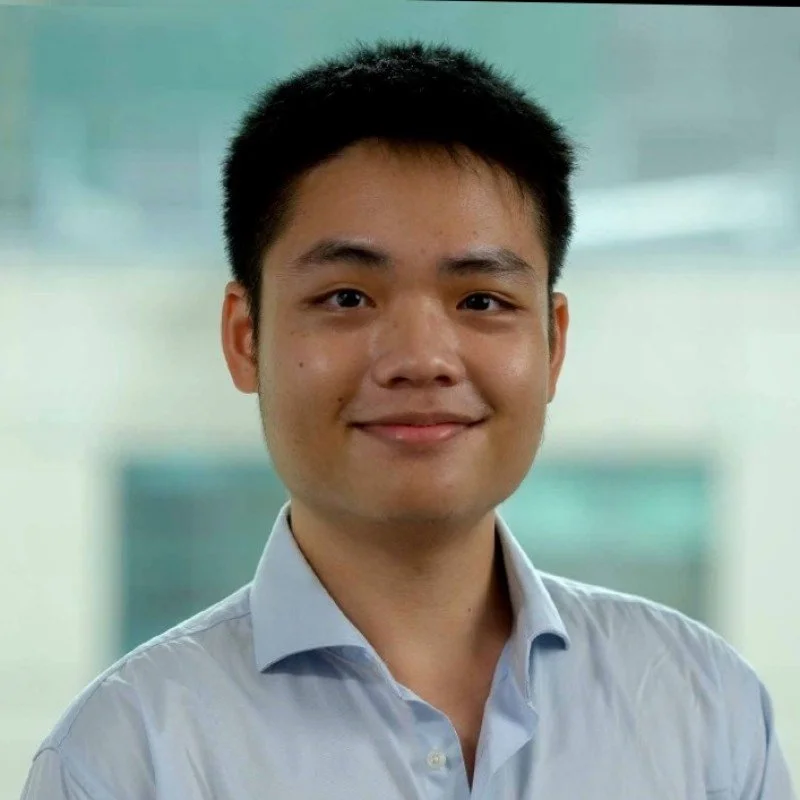
Thanh Doan, a recent graduate of Johns Hopkins University studying molecular biology and public health, recalled believing he had secured a research position during his sophomore year. After weeks of discussion, he stopped applying to other roles and began preparing for the one he was pursuing.
Months later, the position fell through after the lab lost funding.
“You spend a lot of time and energy toward a specific goal, and then because of factors beyond your control, your position changes,” he said.
Over time, students learn that no path is ever fully guaranteed. Even long-term plans must remain flexible under systems where policies, opportunities, and timelines can change without warning.
“It requires me to be spontaneous and deal with uncertainty in a way that is not always in our favor,” he said. “Life is never that linear. It is always winding.”
Yet within these constraints, some students learn to navigate the system strategically. Large corporations often operate under rigid hiring policies, while smaller companies or startups may offer more room for negotiation.
“I can’t negotiate with PwC, but I can negotiate with the CEO of a startup,” Chen said.
For many, this means approaching the job search with flexibility and openness to alternative paths.
“Be flexible in pursuing your goal. Know that so many things are negotiable,” Chen said.
At the same time, she encourages students to remain open to opportunities beyond the United States.
“The U.S. is just one country in the world,” she said.
Despite these constraints, Doan said the experience has also shaped adaptability.
“We’re very good at dealing with uncertainty. That’s something that makes us strong,” he said.
“We’re very good at dealing with uncertainty. That’s something that makes us strong.”
—Thanh Doan
For many international students, career planning becomes an exercise in constant calculation. Many become unusually careful planners, learning to navigate uncertainty long before entering the workforce. Yet within that uncertainty, many students develop a kind of adaptability that extends far beyond the job search itself: the ability to navigate instability, reinvent themselves, and continue moving forward even without guarantees.
