Who Gets to Have Taste?
On class, culture, and the illusion of personal preference
Growing up at an international school in Vietnam, I knew a group of French-Vietnamese girls who were the iconic “it girls” of our community. From the stacks of bracelets on their wrists to their minimalist makeup and carefully curated Instagram feeds, which balanced art galleries with understated selfies, to the furniture in their homes, which blended French and Asian design sensibilities, they seemed to possess an intuitive understanding of what was aesthetically desirable. They embodied a kind of “niche” sensibility, a certain distinction and cultural awareness, before I ever had the language to describe it.
At fifteen, I believed this was what taste looked like: innate, effortless, and entirely personal, like a personality you’re either born with or not.
Looking back, there was another layer to this that I didn’t fully understand at the time. It wasn’t just how they dressed or what they posted, but the worlds they moved within. The sports they played, tennis and golf; the music that filled their homes, soft French jazz and older records, the kind you don’t just stumble upon; the places they vacationed, which mirrored the same understated elegance they embodied.
These weren’t just preferences, but entire environments. It wasn’t just what they liked. It was what they had always been surrounded by.
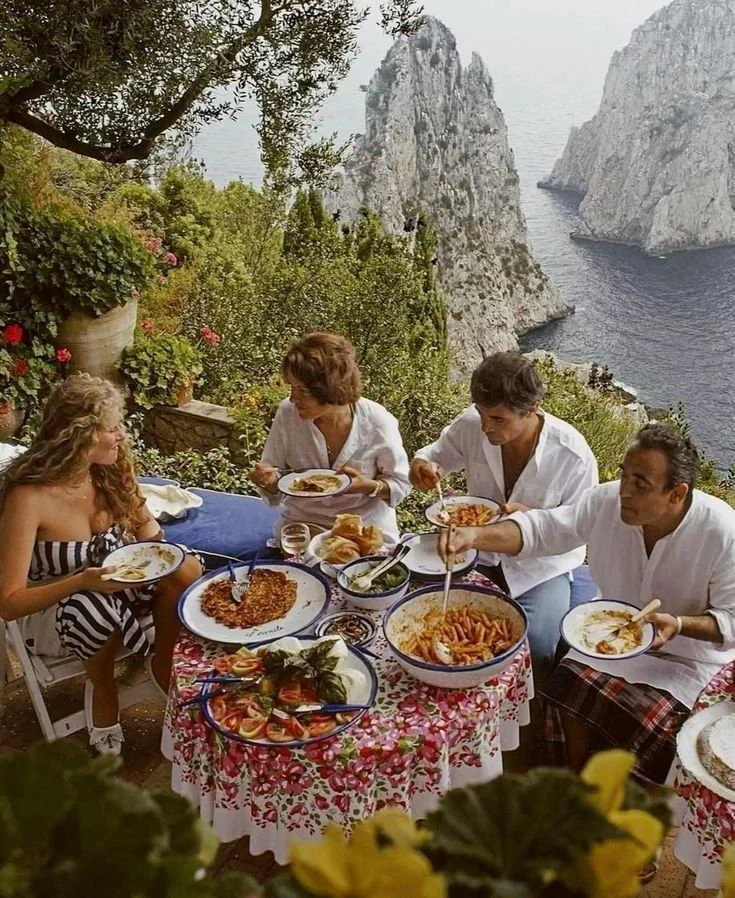
Taste, I began to realize, is shaped long before it is expressed. It is formed through repeated exposure to certain spaces, objects, and ways of living. What appears to be effortless preference is often the result of consistent access.
In this sense, taste is not only personal or cultural, but deeply economic. It is contingent on what one is able to encounter in the first place. To have “good taste” is, in many ways, to have been positioned close to what is already recognized as such.
Taste, I realized, was not simply expressed: it was built. And for some, it had been building their entire lives, long before they were aware of it.
Preferences were refined, repeated, and gradually solidified into something that felt instinctive, almost innate.
But this raises a further question:
Where does that confidence come from? Who is able to trust their taste, and who learns to question it?
Much of the discourse surrounding taste treats it as an individual, almost instinctive expression of identity. This essay challenges that assumption. What we call “good taste” is not neutral or purely personal, but shaped by systems of cultural power that determine what is visible, valued, and recognized. Some people are positioned to develop taste in alignment with what is already considered desirable. For them, preference feels natural. For others, it feels like translation.
I began to notice this more clearly as I moved between cultural contexts. What counted as “good taste” consistently aligned with Western or European aesthetics. The girls I admired were not only seen as stylish but as authoritative. Their preferences carried legitimacy. They did not need to strive for cultural acceptance; they were born into it, in the way they dressed, spoke, and moved. Everything they gravitated toward already matched what was recognized as desirable, so their choices appeared effortless.
In contrast, my own preferences felt uncertain, as if they needed validation before I could fully believe in them. What came naturally to them required conscious effort for me, as if I were constantly measuring my taste against something external. At times, imitation felt unnatural, almost embarrassing, like I was trying on a version of myself that didn’t quite fit.
When your cultural background already aligns with what is considered desirable, confidence doesn’t feel like confidence. It just feels like being…right. When it does not, preference becomes something you question and negotiate. Taste is no longer just about what you like, but whether it will be recognized.
This pattern extends beyond personal experience. If taste is shaped by systems of visibility and legitimacy, it becomes clear how certain aesthetics gain recognition while others remain overlooked. Cultural elements that were once ignored or undervalued often only become “tasteful” after they are reframed within dominant contexts.
More recently, a fashion trend on TikTok sparked controversy when traditional Indian garments, such as draped scarves and sheer shawls typically worn as dupattas, became popular online. Users rebranded the look as the “Scandinavian scarf,” with one white influencer describing it as “very European, very classy,” effectively stripping it of its cultural origin and reframing it within a more legible aesthetic language. South Asian creators were quick to call out the Desi influences and the lack of acknowledgment of the cultural and historical context from which these styles emerge. As one writer noted, this disregard for the design’s roots feels like an erasure of heritage, reducing centuries of meaning to just another “trend” to be capitalized on.


A similar dynamic appears in the rise of the “clean girl” aesthetic, often associated with figures like Hailey Bieber and characterized by slicked-back buns, gold hoops, and neatly styled nails, elements long present in Black and Latinx beauty cultures. Yet these features often gain broader recognition only after being reframed within a white, Western aesthetic context, where they are presented as minimalist, refined, and widely desirable. In this shift, what is valued is not the elements themselves but their alignment with a standard already recognized as legitimate.
Taste, then, is not simply about preference. It is shaped by systems that determine what is visible, valued, and recognized.
There’s a reason for this. French sociologist Pierre Bourdieu describes taste as a form of “cultural capital,” something that signals belonging and distinction rather than pure personal preference. What feels natural or intuitive is often the result of repeated exposure and social conditioning. His idea of misrecognition, where socially constructed distinctions come to feel natural or innate, helps explain why taste feels like part of our identity, even when it is learned.
Similarly, in Ways of Seeing, John Berger argues that the way we see and interpret images is shaped by systems of power that determine what is considered beautiful or desirable. What appears universal is, in reality, constructed.
Mass media builds on this by turning taste into something that can be acquired. It promotes the idea that taste is not something we develop, but something we can access through consumption, suggesting that we are not yet enough, but could be. In this system, taste is never secure. It is something to be improved, refined, and pursued, but never fully achieved.
At its core, the pursuit of taste is tied to a desire for recognition and belonging. To have “good taste” is not simply to prefer certain things, but to be recognized as someone whose preferences align with what is considered legitimate and worthy. This helps explain why taste can feel so personal, even when it is shaped externally. The more these standards are internalized, the more they appear as individual judgment rather than social influence.
If even authenticity can be shaped by these systems, then the idea of having purely personal taste becomes increasingly difficult to locate.
I once believed my inability to trust my own taste was a personal shortcoming. I now understand it as a reflection of the standards I had learned to measure myself against. Moving between cultures exposed me to a range of often conflicting standards, leaving me in a constant cycle of trying to align myself with what was recognized.
Over time, this became exhausting. The more I tried to keep up, the less anything actually felt like mine.
This does not mean that personal preference is entirely absent, but it does suggest that what feels most like our own may be more influenced than we realize. To recognize this is not necessarily to reject taste, but to question it. We should consider not only what we like, but why we like it and whose standards have shaped that judgment.
While these structures cannot easily be undone, recognizing them offers a starting point. It creates space to question what is presented as legitimate, and to choose more deliberately what we value.
Over time, I’ve come to see this experience from another perspective. Exposure to different ways of living and valuing has made it possible not just to adopt what is recognized, but to choose what resonates and leave what does not.
In this sense, developing taste is not about aligning with a single standard, but about learning to move between them with awareness. Taste is not something we passively absorb, but something we actively construct, shaped by what we choose to keep and what we choose to leave behind.
Confidence, then, is not the absence of influence, but the ability to recognize it without being defined by it.
And if taste depends on recognition, then the question is no longer whether we have taste, but whether we were ever given the conditions to trust it in the first place.
Maybe developing taste isn’t about getting it “right,” but about slowly unlearning who we were told to be, and trusting that what remains is enough.